

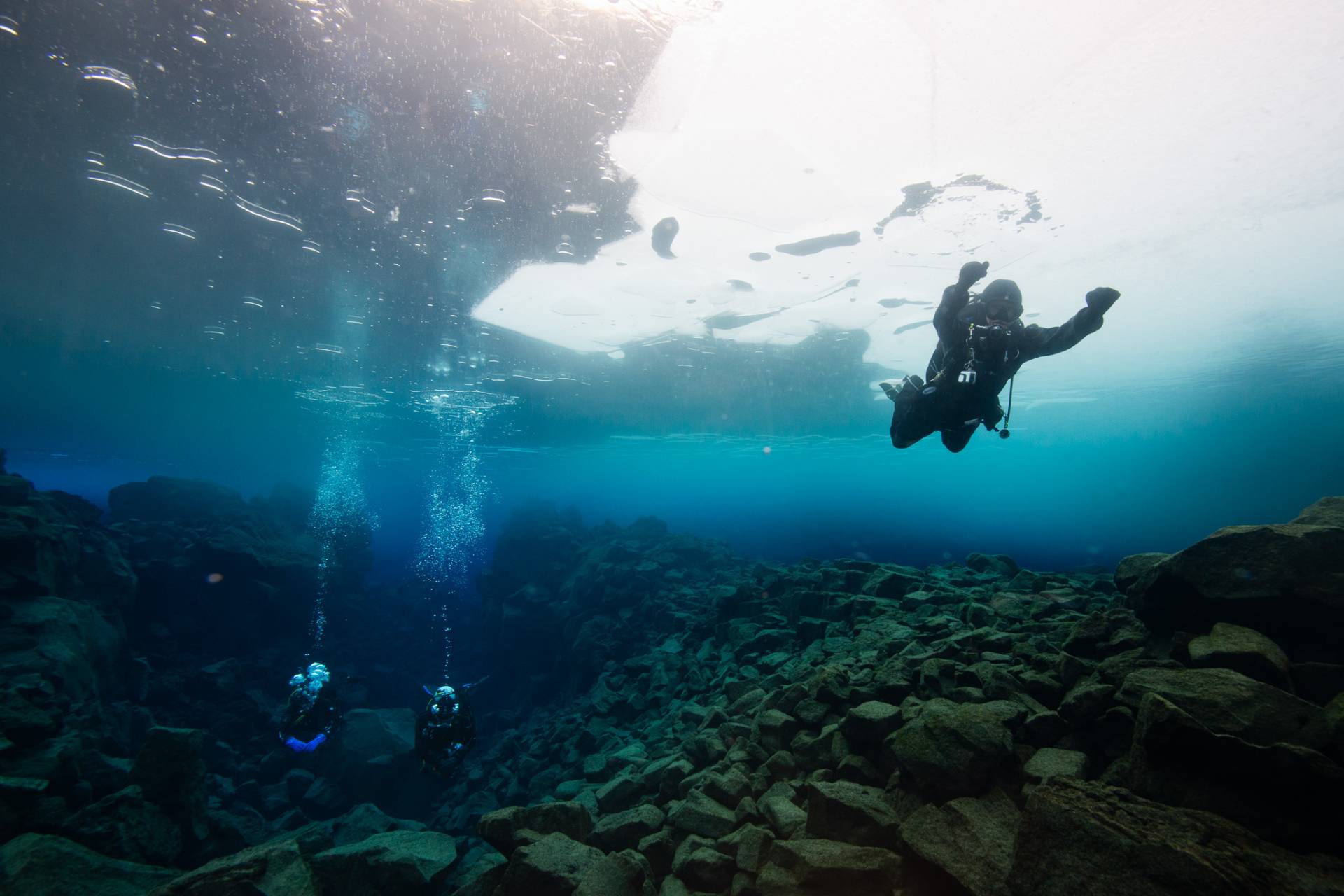
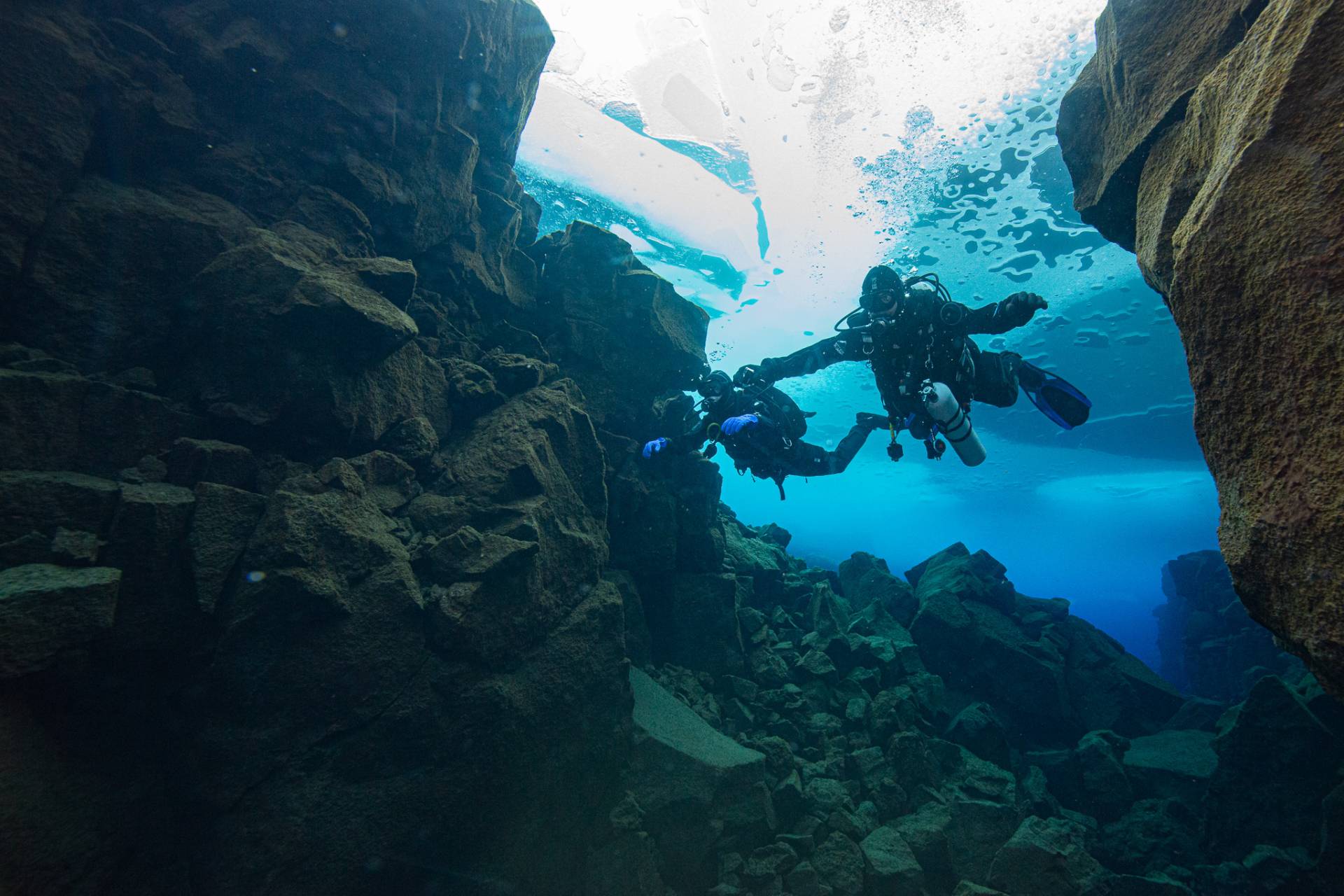
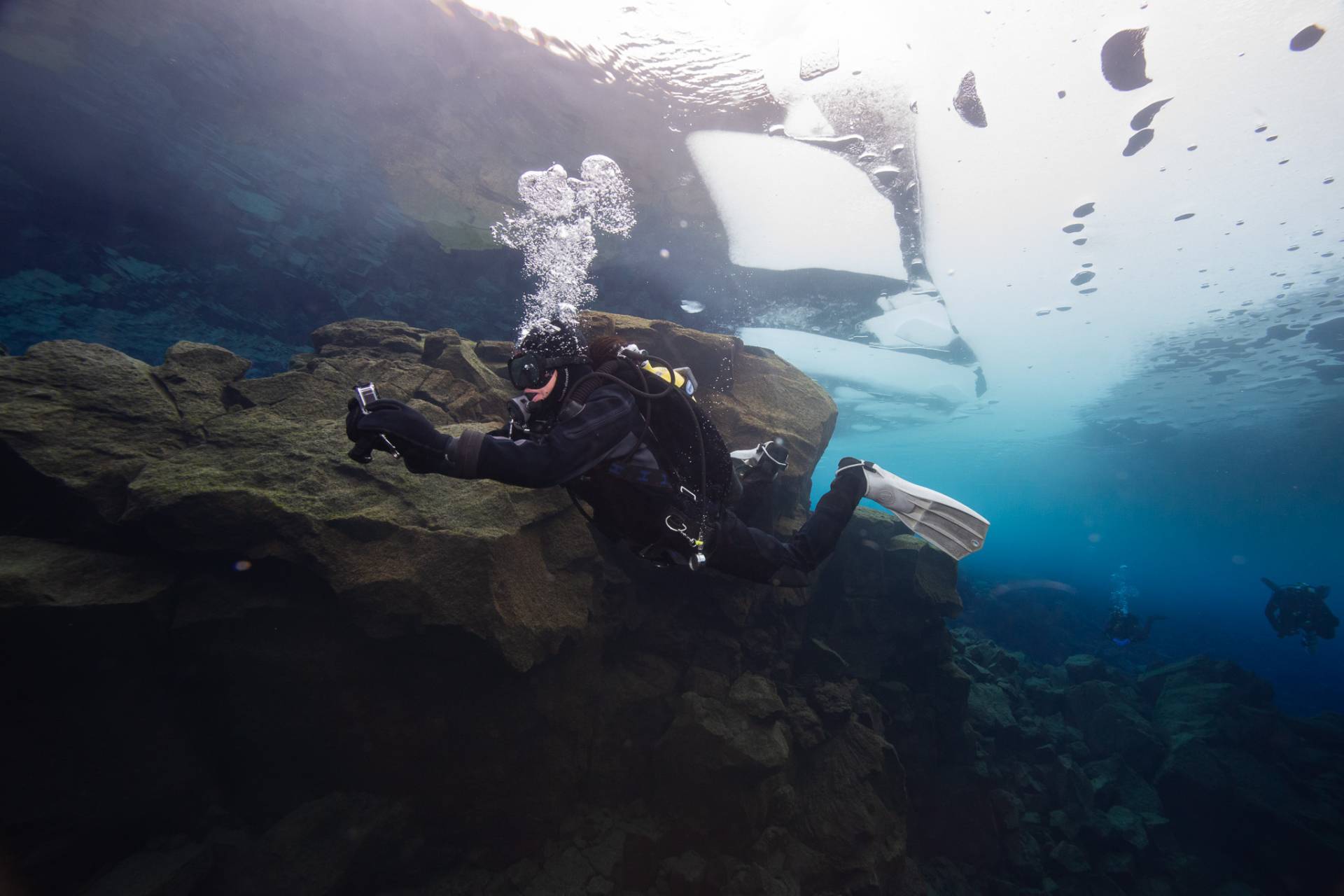
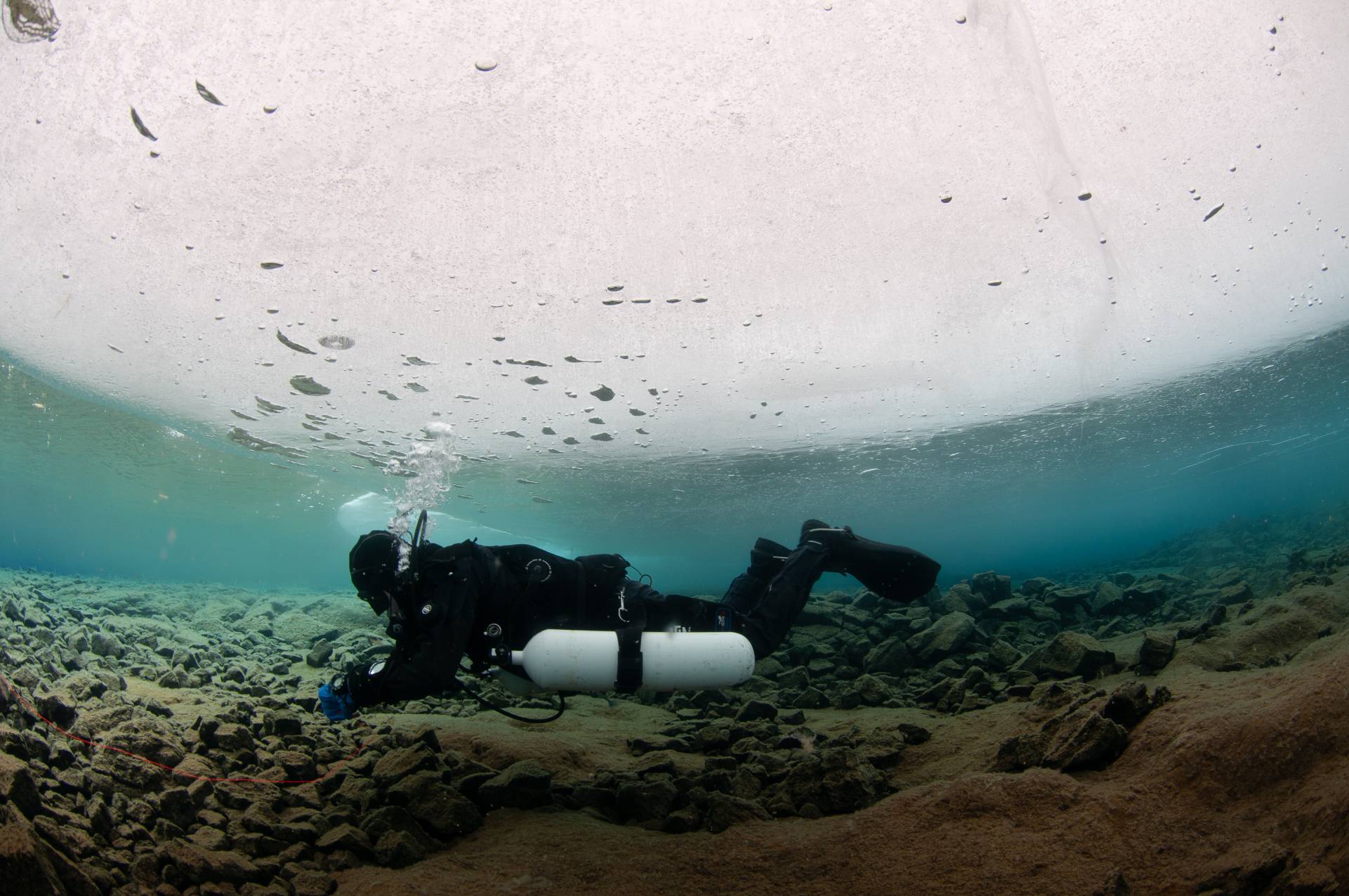
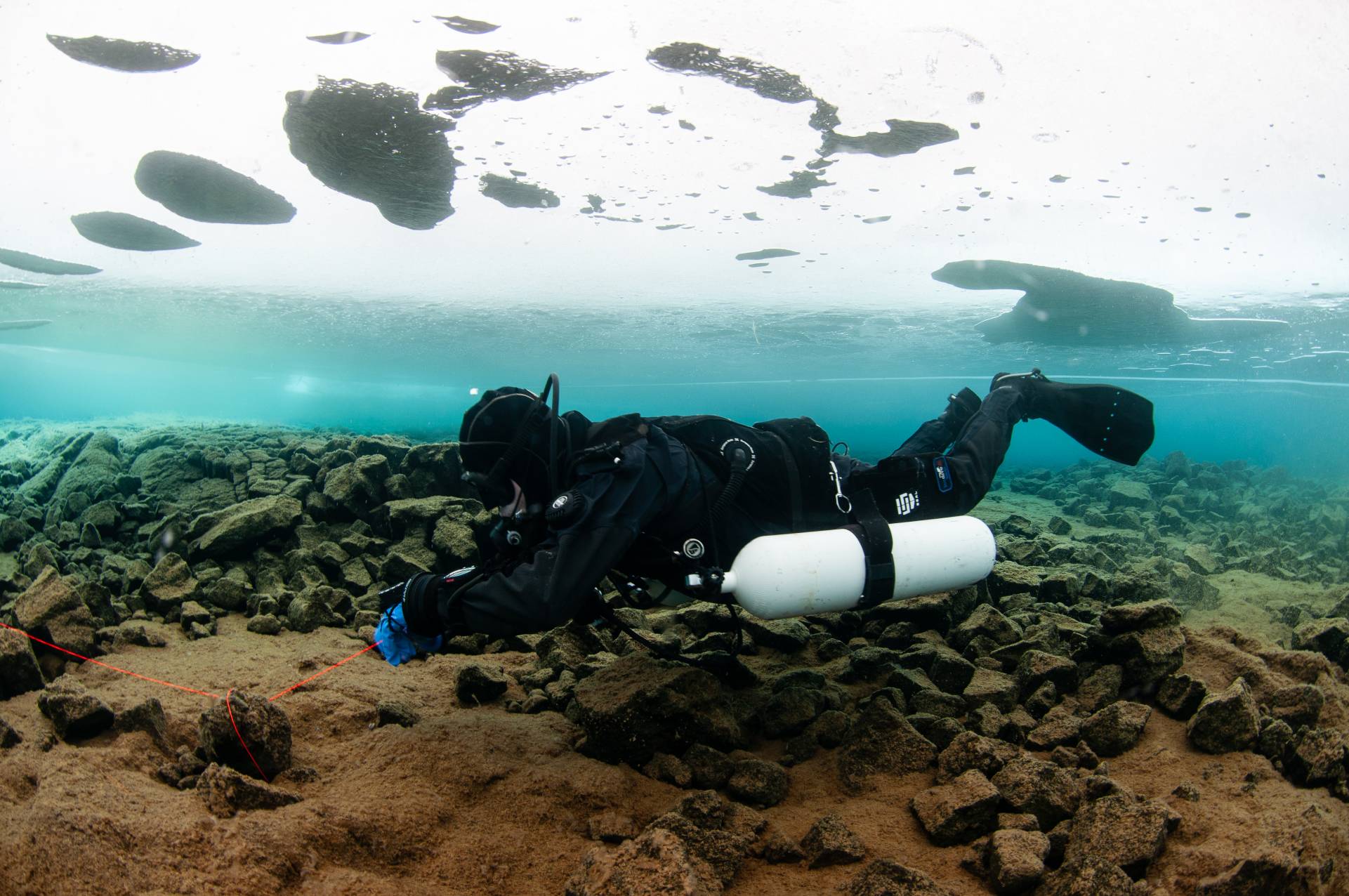
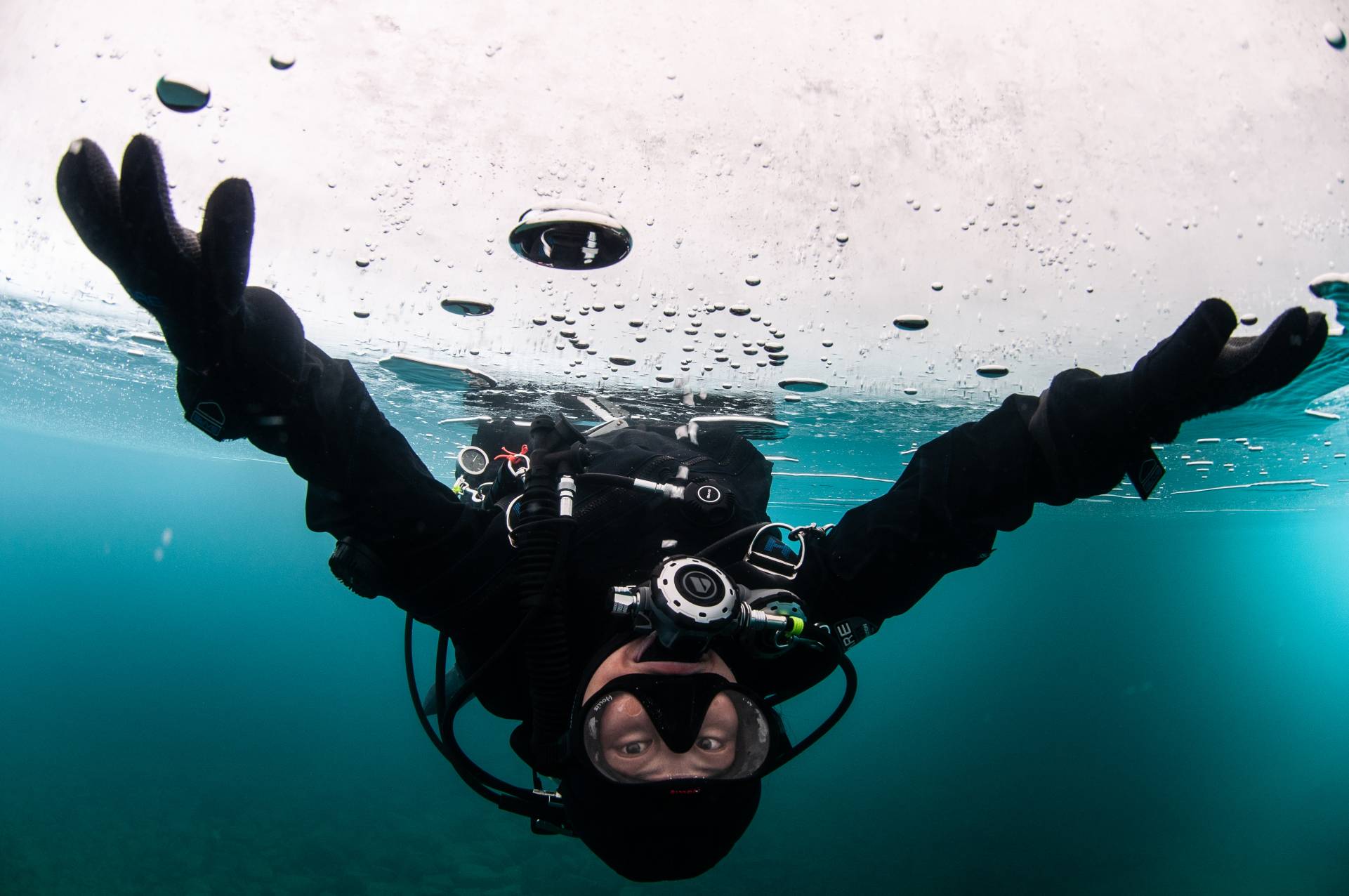



Arctic & Polar Diving Program
This program prepares divers for expeditions to Greenland, Iceland, Svalbard, Arctic Canada, Antarctica and other cold, remote waters.
The program combines SDI and TDI courses in cold-water survival, redundant equipment, navigation and equipment setup, and includes at least 10 supervised dry suit dives across the courses, several of them in water of about 2–3°C.
It is not a fixed package. We look at the certifications and experience you already have and at what your expedition operator requires, and plan the training around the gaps.
What we teach
- SDI Drysuit Diver: drysuit control, seal management, emergency procedures, and trim/buoyancy in heavy exposure suits.
- SDI Solo Diver: self-reliance, decision-making, contingency planning, and redundant equipment use for independent diving scenarios.
- TDI Intro to Tech: doubles configuration, buoyancy control, gas management, and redundancy (two regulators/tanks) to reduce freeflow risk and manage higher gas consumption.
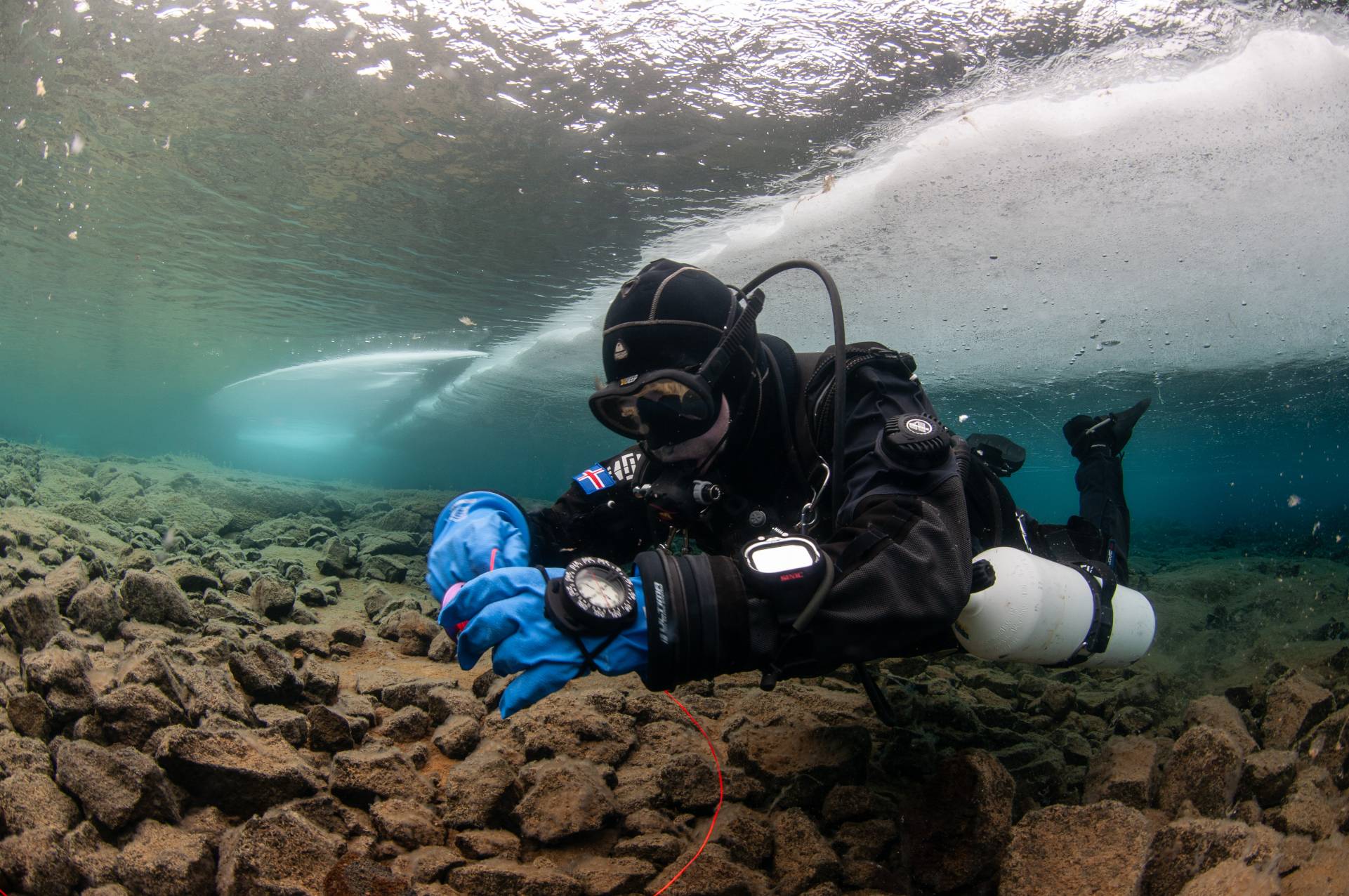
- SDI Underwater Navigation: compass use, navigation in low visibility or featureless terrain, and dive planning for polar and Arctic sites.
Who it’s for
- Certified openwater divers preparing for Arctic or polar expeditions(Greenland, Iceland, Svalbard, Arctic Canada, Antarctica, and similar regions).
- Recreational or technical divers needing coldwater and redundancy skills.
- Expedition divers who must be self-sufficient in remote, cold environments.
Program highlights
- Minimum 10 supervised drysuit dives (counted across courses). A subset of those dives will be in ~2–3°C water to simulate polar exposure – other dives occur in milder local conditions to practice skills progressively.
- Classroom/theory, confined water practice, and open-water training dives planned around expedition needs (ice entries, boat operations, low visibility navigation).
- Hands-on gear setup and testing: coldwater regulator selection and prep, drysuit + undersuit fitting, and guidance on electrical heating options when appropriate.
- Training in redundant regulator/tank setups and procedures to reduce freeflow risk and handle increased gas use.
- Emergency planning for remote operations, including surface support, communication, and contingency checklists relevant to polar and Arctic travel.
Safety & logistics
- All training under experienced instructors with Arctic and polar expedition knowledge; dives include surface support and emergency protocols.
- Flexible scheduling to accommodate weather and expedition timelines.
- Pre-course equipment checks, regulator cold water testing, and personalized gear recommendations.
Recommended equipment
Personal mask, fins, dive computer, compass, SMB/DSMB, backup lights, cutting tool.
Drysuit and appropriate undersuit; electrical heating discussed on a case-by-case basis.
Redundant second stages or independent/modeled doubles per SDI/TDI guidance.
About our instructors
Icedive.is instructors are experienced coldwater and polar/Arctic expedition divers with extensive teaching and expedition preparation experience. We assist with equipment selection, regulator/suit setup, and practical training for Arctic and polar conditions.
Individual training path
The Arctic & Polar Expedition Diver Qualification Program is not a fixed course package.
Every diver enters the program with different certifications, experience, and expedition objectives. Before training begins, Icedive.is reviews the diver’s existing qualifications, logged experience, recent diving activity, equipment familiarity, and the requirements of the intended expedition operator.
Based on this assessment, an individual training pathway is created.
Divers who already hold relevant certifications, such as Drysuit Diver, do not need to repeat the same course. Instead, their existing qualification and practical ability are verified, and other training can be selected to strengthen the skills most relevant to Arctic and polar expedition diving.
Available training options
Courses may include:
- SDI Drysuit Diver: for divers without formal drysuit training or sufficient drysuit experience.
- SDI Solo Diver: develops self-reliance, redundant equipment procedures, gas planning, risk assessment, and the ability to manage problems independently.
- TDI Intro to Tech: develops precise buoyancy and trim, advanced equipment configuration, redundant gas systems, propulsion techniques, gas management, and team procedures.
- SDI Underwater Navigation: develops compass and natural navigation skills for low visibility and relatively featureless underwater environments.
Additional SDI/TDI specialties may be incorporated when appropriate to the diver’s expedition plans, existing qualifications, and experience.
The objective is not to collect unnecessary certification cards. The objective is to identify gaps in the diver’s preparation and provide the training and practical experience needed to meet the Arctic & Polar Expedition Diver assessment standard.
Previous certifications & experience
Existing certifications are taken into account when creating the training plan. However, holding a certification does not automatically demonstrate recent practical ability.
For example, a diver who already holds a Drysuit Diver certification may not need to repeat the course, but will still be required to demonstrate appropriate drysuit control during the qualifying dives.
Previous logged cold-water and drysuit experience may also be considered when determining the amount and type of training required.
Minimum practical requirement
Regardless of previous certifications, the diver must demonstrate the required competencies during practical assessment.
The final Arctic & Polar Expedition Diver Qualification Certificate and Diver Assessment Record therefore document both previous recognized training and certifications, and the skills and experience verified by Icedive.is during the qualification process.
This allows expedition operators to see not only which certification cards the diver holds, but also what the diver has recently demonstrated in real cold-water conditions.
Program length and price
Because every diver enters the program at a different level, course selection, number of training days, and price may vary.
A diver requiring the complete training pathway may complete the full program, including a minimum of 10 supervised drysuit dives. An experienced drysuit diver may instead use the program to develop other relevant skills and complete the required practical assessment.
After reviewing the diver’s certifications, logbook, recent experience, intended destination, and expedition-operator requirements, Icedive.is provides an individual training plan and price.
Full training pathway: from 500,000 ISK. Individual programs are priced according to the training and assessment required.
Book the program
Book your Arctic & Polar Diving Program or ask for an individual plan and gear checklist.
Provide your certification level, recent experience, and planned expedition region/dates, and we’ll recommend course length and schedule, which can differ between individuals.
Price: from 500,000 ISK.